01932 847 900 Message us



 What is Muscle (Myofascial) Imbalance?
Your body has muscles (or groups of muscles) that are attached to either side of a joint and work against one another to control the movement of the joint or part of the body. It’s a bit like your hands on a steering wheel: you can drive with one hand, but two hands working against each other gives you much better control.
While the pull on your left and right hands is equal, the car will stay in the middle of the road. This is a balanced and sustainable system. With only slight adjustments made to the pull on either hand the car can be steered in either direction in a precise and controlled way.
What is the OptiNeck Balance Wedge® and how does correct the problem?
Now imagine what it would be like if the inherent pull of your right hand was even slightly more than the left hand. There would be an underlying tendency for the wheel to be turned to the right, meaning that the car would always be drifting to the right of the lane.
You would therefore have to constantly correct the direction by turning back to the left, but as soon as you stop actively correcting, the wheel is being pulled subtly to the right again. This is an imbalanced and unsustainable system.
When we spend too much time in unbalanced postures, positions and activities, the myofasica on one side of the system gets stronger, shorter and tighter. On the other side, it gets longer, looser and weaker. This is a muscle imbalance or more accurately, a myofasical imbalance. The shorter, stronger myofasica pull that part of your body out of position, and your whole body will end up making adjustments to compensate.
For instance, if you regularly use the muscles on one side of a joint a lot more than the other, or these muscles and soft tissues seldom get stretched, they may get stronger but they also get shorter and tighter.
This often ends up causing muscle and joint strain leading to pain and, in the longer term, joint wear & tear (see the list of conditions commonly caused by muscle imbalance below).
Muscle imbalances tend to occur in patterns and which then result in a Postural Dysfunction.
This is where, as a result of the imbalanced positions and postures we spend most of our time in, we start to develop myofascial imbalances. This changing alignment of our bodies then puts strain on certain parts of the body, typically the neck, shoulders and upper back. This then results in a strain, stiffness and is commonly the cause of neck pain, shoulder and upper back pain and even headaches.
The OptiNeck Balance Wedge® has been specifically designed by Michael O'Reilly to address the muscle (myofascial), joint and postural imbalances that develop as a result of living in the information age. In doing this it corrects many of the underlying causes of neck pain, shoulder pain, upper back pain and neck related headaches. To find out more and to buy, tap the link below.
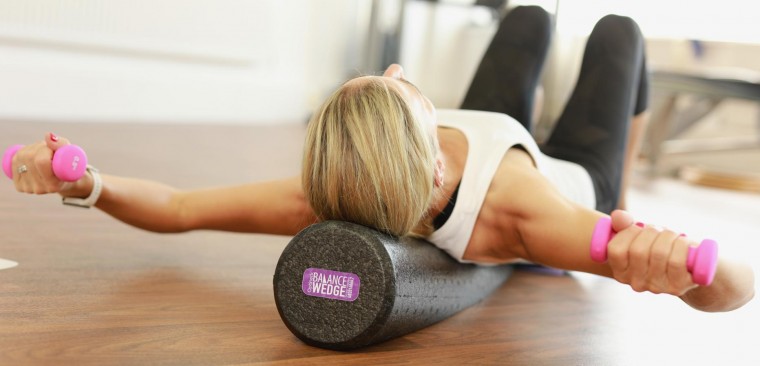
Find out more about the OptiNeck Balance Wedge®
When a muscle imbalance pulls one of your joints out of position, this puts a strain on that joint. When that strain stresses the nerves around the joint, you feel pain. If your body readjusts itself to ease the pain, other sets of muscles can become imbalanced – and the cycle can continue. A small, local problem in some muscles can become a neuro-muscular-skeletal problem that affects distant parts of your body.
Postural problems can manifest in a wide range of different ways such as:
Once properly assessed, muscle imbalances and postural dysfunctions are fairly easy to correct. Generally we focus on three main areas:











The Weybridge & Walton Physio Therapy team are registered with:

We’re trusted by leading insurers: